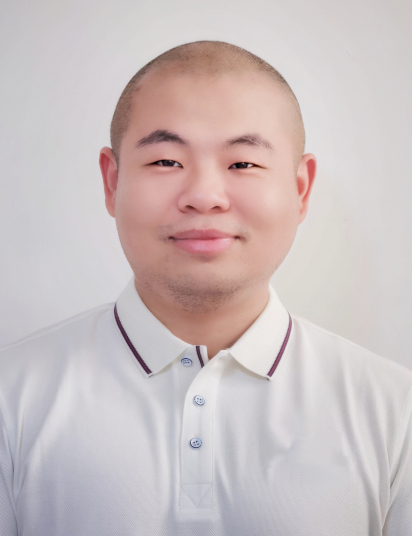
Da "Alex" Yan, Ph. D.
CALL & Feedback Researcher @ Wenzhou Medical University
Da "Alex" Yan(闫 达), PhD, works on CALL and feedback.
He teaches at Wenzhou Medical University. His research interests include language learning, formative assessment, and human-computer interaction. He is listed in the 2026 World's Top 2% Scientists (Stanford / Elsevier). He is now serving as an academic editor of PLOS ONE, and an editorial board member of HSSC.
About
Bio: I hold a Ph.D. degree in Translation (2022–2025) from University of Science, Malaysia (USM). With over a decade of teaching experience at Wenzhou Medical University and Xinyang Agriculture and Forestry University (XYAFU), I have taught core courses such as Introduction to Translation, Basic and Advanced Interpreting, and Computer-Assisted Translation, and many other English as a second language courses. I have served as the principal investigator or main contributor for 12 social science research projects, focusing on translation and educational practices. I have published 19 peer-reviewed papers and received several teaching awards, including the second prize in the Central China Translation Technology Teaching Competition. In 2026, I was named to Stanford University & Elsevier's World's Top 2% Scientists list (single-year impact in Education, subfield rank #615). In addition to my academic work, I have provided interpreting services for several international events, including the International Tea Culture Festival and foreign cooperation projects with local governments and universities. I also review for multiple international journals.
Research Interests
My research centers on Computer-Assisted Language Learning (CALL), Generative AI in Education, and Formative Assessment. Specifically, I investigate how intelligent technologies—such as large language models (LLMs) and automated corrective feedback systems—shape second language (L2) writers' feedback seeking, metacognitive processing, and revision trajectories. Through mixed-methods interventions and process-oriented analytics, my work explores how rubric co-creation and dialogic human–AI interaction foster feedback literacy, agency, and productive feedback uptake.
In parallel, my scholarship extends to Translation Technology and Interpreting Studies, with a focus on human–computer interaction (HCI), translator agency, and cross-cultural communication. I examine how emergent technologies and data-driven methods transform pedagogical practices in translation training, intercultural mediation, and language education.
Publications
| Year | Publication | Web View | Post-print |
|---|---|---|---|
| 2026 | Web view | Postprint | |
| 2026 | Web view | Postprint | |
| 2026 | Web view | Postprint | |
| 2026 | Web view | Postprint | |
| 2026 | Web view | Postprint | |
| 2025 | Web view | Postprint | |
| 2025 | Web view | Postprint | |
| 2025 | Web view | Postprint | |
| 2024 | Web view | Postprint | |
| 2024 | Web view | — | |
| 2024 | Web view | Postprint | |
| 2023 | Web view | — | |
| 2023 | Web view | — | |
| 2023 | Web view | Postprint | |
| 2023 | Web view | — | |
| 2022 | Web view | — | |
| 2022 | Web view | — | |
| 2022 | Web view | — | |
| 2016 | Web view | Postprint |
Conf & Talks
| Year | Presentation | Web View | Slides |
|---|---|---|---|
| 2026 | Towards Hybrid Intelligent Feedback in EFL Writing: A Qualitative Inquiry into GenAI-Augmented Peer Dialogue and Co-Regulated Learning | — | Slides |
| 2025 | Breaking Boundaries and Reshaping Paradigms: New Landscapes of Translation Studies in the New Era | — | Slides |
| 2025 | When Traditional Chinese Medicine Translation Meets Generative AI: "Divergence, Convergence, and Surprise" in Human-AI Interaction for the English Translation of Huangdi Neijing | — | Slides |
| 2025 | From "Dance of Agency" to Symbiosis: Translator Agency in the Age of GenAI | — | Slides |
| 2025 | Opportunities and Challenges of Cross-Cultural and Linguistic Communication and Translation in the Vision of Generative AI | — | Slides |
| 2023 | L2 Writers' Feedback-Seeking from ChatGPT for Automated Written Corrective Feedback: Insights from a Multiple Case Study | — | Slides |
| 2023 | L2 writer's feedback processing in the context of computer-mediated language learning | — | — |
| 2022 | Gender Difference in Digital Literacy Among Translation Trainees | — | Slides |